

Environment Pollution Composition for Class 6, 7, 8, SSC & HSC: Environment pollution is an important topic for students and a major concern worldwide. This composition explains the causes, effects, and prevention of pollution in simple English. It will help learners understand the topic and prepare effectively for school and college examinations.
| Article topic | Composition Writing |
| Composition title | Environment Pollution |
| Suitable For | Class 6, 7, 8, SSC, HSC |
| Word Variant | 200, 250 words |
Trending Today; Internet Composition for Class 6,7,8, SSC & HSC
Environment Pollution Composition for 6,7,8, SSC
Introduction: Environment pollution is one of the greatest problems in the modern world. It means making our surroundings dirty and harmful through human activities. Air, water, and sound pollution are the most common forms of pollution. It affects human health, animals, plants, and the natural balance of the earth. Therefore, we must take proper steps to protect our environment.
Causes of Air Pollution: Air pollution occurs when harmful gases, smoke, and dust mix with the air. Smoke from factories, brick kilns, and motor vehicles is a major cause of air pollution. Burning plastic, rubbish, coal, and other fuels also makes the air dirty. It causes breathing problems, coughing, and other diseases. To reduce air pollution, we should plant more trees, use cleaner energy, and control smoke from vehicles and factories.
Causes of Water Pollution: Water pollution happens when harmful substances mix with rivers, ponds, lakes, and other water sources. Many factories release chemical waste into rivers, while people throw rubbish, plastic, and sewage into water. Farmers sometimes use chemicals that flow into nearby water sources. Polluted water spreads diseases and harms fish and other aquatic animals. We should keep water sources clean and treat industrial waste before releasing it into rivers.
Causes of Sound Pollution: Sound pollution, also known as noise pollution, is caused by excessive and unwanted sounds. Vehicle horns, loudspeakers, construction work, factories, and loud music are common sources of noise. It can cause headaches, stress, hearing problems, and difficulty concentrating. It also disturbs students, patients, and elderly people. We should avoid unnecessary honking, control loudspeakers, and keep the volume of music low to maintain a peaceful environment.
The Greenhouse Effect and Deforestation: The greenhouse effect occurs when certain gases in the atmosphere trap heat and keep the earth warm. However, increased greenhouse gases from burning fossil fuels contribute to global warming and climate change. Deforestation makes this problem worse because trees absorb carbon dioxide from the air. Cutting down forests also destroys wildlife habitats and reduces rainfall in some areas. We should plant more trees, protect forests, and use energy wisely to reduce these harmful effects.
Conclusion: Environment pollution is a serious threat to life on earth. It can be controlled if individuals, communities, and governments work together. We should plant trees, dispose of waste properly, reduce plastic use, and keep our surroundings clean. Factories must control harmful emissions, and people should avoid unnecessary noise. Schools should teach students about environmental protection. Through awareness and responsible actions, we can create a cleaner, healthier, and safer world for future generations.
Environment Pollution Composition for HSC
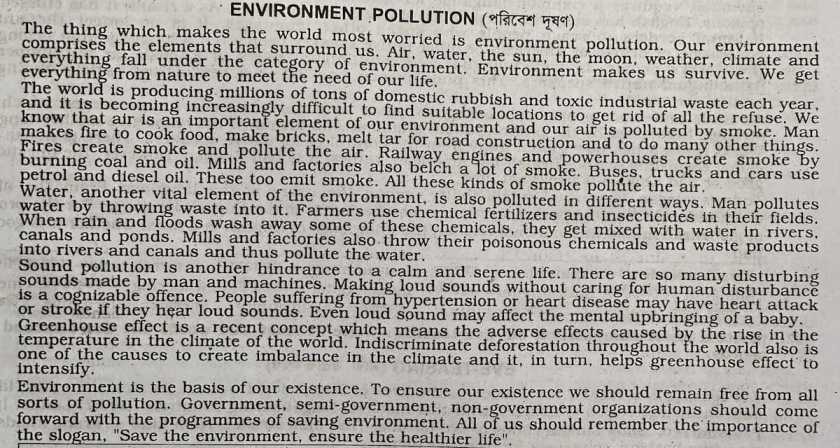
Introduction: Environmental pollution is one of the most serious problems facing the modern world. It refers to the contamination of air, water, and soil by harmful substances. A clean environment is essential for the survival of humans, animals, and plants. However, rapid industrialization, urbanization, and population growth have increased pollution to an alarming level. It has become a major threat to public health and ecological balance.
Causes of Environmental Pollution: There are several causes of environmental pollution. Smoke from factories, brick kilns, and motor vehicles pollutes the air. Burning coal, petrol, diesel, and plastic releases harmful gases into the atmosphere. Water pollution occurs when industrial waste, sewage, pesticides, and plastic are dumped into rivers, canals, and ponds. Excessive use of chemical fertilizers damages the soil. Moreover, deforestation, unplanned urbanization, and improper waste disposal contribute to environmental degradation. Unnecessary honking, loudspeakers, and industrial machinery are major sources of noise pollution.
Effects of Environmental Pollution: Environmental pollution has serious consequences for human health and nature. Air pollution causes respiratory diseases, asthma, and other health problems. Polluted water spreads diseases and threatens aquatic life. Soil pollution reduces agricultural productivity and affects food quality. Noise pollution causes stress, sleep disturbances, and hearing problems. Furthermore, increasing greenhouse gases contribute to global warming and climate change. Rising temperatures, irregular rainfall, floods, droughts, and rising sea levels threaten human communities and wildlife. Pollution also destroys natural habitats and reduces biodiversity.
Measures to Prevent Pollution: Environmental pollution can be reduced through effective planning and public awareness. Factories should treat industrial waste before releasing it into the environment. Governments must enforce environmental laws and control harmful emissions. People should avoid throwing rubbish into rivers and public places. Planting trees, protecting forests, recycling waste, and reducing plastic use are important measures. Renewable energy and public transport can help reduce air pollution. Schools and colleges should educate students about environmental protection. Every citizen should take responsibility for keeping the surroundings clean.
Conclusion: Environmental pollution is a global challenge that requires immediate attention. Governments, organizations, and individuals must work together to protect nature. Economic development should not come at the cost of environmental destruction. By adopting sustainable practices and following environmental laws, we can ensure a healthier and safer world for future generations. Protecting the environment is not only our duty but also essential for our survival.

Nasar is the author behind English Write Guide, creating simple and helpful content on English grammar, writing, stories, letters, essays, and compositions to support learners and students.