

Population Problem in Bangladesh Composition: This composition explains the causes, effects, and possible solutions to overpopulation in Bangladesh. Written in easy English, it helps students understand this important social issue and prepare effectively for school examinations. Read the composition carefully and learn how population growth affects the country’s development.
| Article topic | Composition Writing |
| Composition title | Population Problem in Bangladesh |
| For Class | 6, 7, 8, 9–10, 11–12 |
| Word Variant | 250, 300 words |
Trending Today; A Clever Fox and A Foolish Crow Completing Story
Population Problem in Bangladesh Composition-1
Introduction:
Bangladesh is a small country with a large population. Overpopulation is one of the biggest problems in our country. The number of people is increasing, but land and resources are limited. As a result, many people cannot enjoy a better standard of living. It also creates obstacles to national development.
Its causes:
There are several causes of overpopulation in Bangladesh. A high birth rate, early marriage, illiteracy, poverty, and a lack of family planning awareness are the main causes. In the past, the death rate was high, but improvements in medical services have reduced it. Many people, especially in rural areas, are unaware of the importance of having a small family. These factors contribute to population growth.
Its negative impacts:
Overpopulation creates many social and economic problems. It causes unemployment, poverty, food shortages, and housing difficulties. Many people cannot afford proper education and healthcare. Agricultural land is being used for houses, roads, and factories. As a result, food production may become insufficient. Traffic congestion, environmental pollution, and poor sanitation are also increasing. Moreover, overcrowded schools and hospitals cannot always provide quality services. These problems slow down the country’s progress.
Its remedy:
The government should take effective steps to control population growth. People should be educated about family planning and the benefits of small families. Girls’ education must be encouraged, and early marriage should be discouraged. Family planning services should be available in both rural and urban areas. The government should also create more job opportunities and increase public awareness through television, newspapers, and community programmes. Every family should understand the importance of responsible parenthood.
Conclusion:
The population problem is a serious challenge for Bangladesh. However, it can be controlled through education, awareness, and proper planning. Both the government and citizens must work together to solve this problem. A balanced population will help ensure a healthier, happier, and more prosperous Bangladesh for future generations.
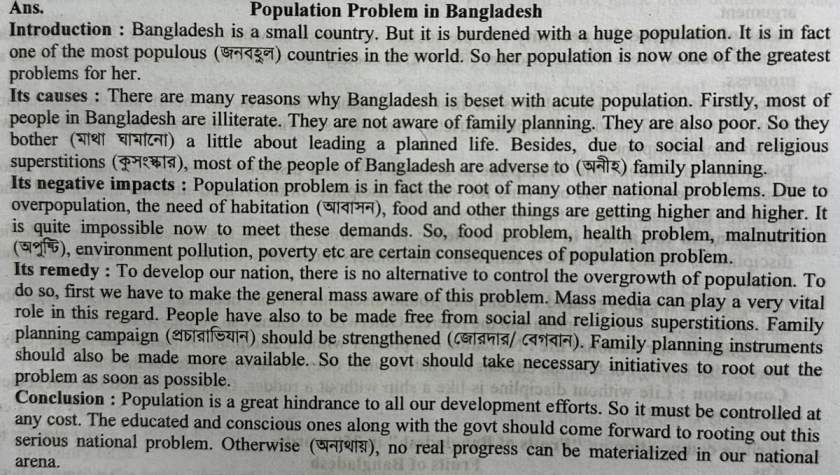
Population Problem in Bangladesh Composition-2
Introduction:
Bangladesh is a small and beautiful country in South Asia. It has a large population compared with its land area. The population problem is one of the major challenges facing the country. Although Bangladesh has made progress in many sectors, rapid population growth creates difficulties for national development. The country’s limited resources cannot always meet the needs of its growing population. Therefore, controlling population growth is essential for a better future.
Problems:
Overpopulation creates several problems in Bangladesh. The most serious problem is unemployment, as many people cannot find suitable jobs. Poverty is widespread among families who struggle to afford food, clothing, and shelter. The demand for educational institutions and medical services is also increasing. Many schools and hospitals become overcrowded. Moreover, agricultural land is being used for houses, roads, and factories. As a result, farmers have less land for growing crops. Traffic congestion, environmental pollution, and housing shortages are also common in crowded cities.
Impacts:
The population problem has negative effects on both society and the economy. Many people cannot enjoy a comfortable standard of living because of limited income and resources. Children from poor families may leave school early to support their households. Unemployment and poverty can increase social difficulties and inequality. Overpopulation also puts pressure on natural resources, including water, forests, and farmland. Excessive use of these resources damages the environment and threatens sustainable development. Consequently, the country faces greater challenges in improving the quality of life for all citizens.
Remedies:
The government and citizens should work together to control population growth. Public awareness campaigns should explain the benefits of small families and responsible parenthood. Family planning services must be available in both rural and urban areas. Girls’ education should be encouraged, and early marriage should be discouraged. The government should create more employment opportunities and improve healthcare and education facilities. People should also learn to use resources wisely. Proper planning and public cooperation can help reduce the harmful effects of overpopulation.
Conclusion:
The population problem is a serious obstacle to the progress of Bangladesh. However, it can be managed through education, awareness, family planning, and effective government policies. Every citizen should understand the importance of maintaining a balance between population and resources. If everyone works together, Bangladesh can become a more prosperous, healthy, and developed country.

Nasar is the author behind English Write Guide, creating simple and helpful content on English grammar, writing, stories, letters, essays, and compositions to support learners and students.