

Climate Change Paragraph: Climate change is one of the major environmental challenges affecting our planet today. This topic helps students understand changing weather patterns, rising temperatures, environmental damage, and the importance of protecting nature.
| Article type | Paragraph Writing |
| Title of Paragraph | Climate Change |
| Suitable for | Class 6, 7, 8, 9-10 (SSC), 11-12 (HSC) |
| Word variant | 100, 150, 200, 250 words |
Trending Today; A Street Hawker paragraph for Class 6,7,8, SSC, HSC
Climate Change paragraph for Class 6, 7
Climate change means long-term changes in the Earth’s temperature and weather patterns. It is a serious environmental problem affecting people, animals, plants, and natural resources. It is connected with human activities and the way people use the Earth’s resources. The main causes of climate change are cutting down forests, burning coal, oil and gas, and increasing air pollution. These activities release harmful gases into the atmosphere and increase global temperatures.
Climate change has many harmful effects on our planet. It can cause extreme heat, irregular rainfall, floods, droughts, storms, and rising sea levels. The melting of glaciers and ice can threaten coastal areas. Many animals and birds may also lose their natural habitats. Farmers can face problems when changing weather affects crops and water supplies. Poor communities are often more vulnerable to these environmental changes and difficulties.
We can reduce climate change by planting more trees and protecting forests. We should save electricity, reduce waste, use public transport, and avoid unnecessary pollution. Renewable energy sources such as solar and wind power can also help. Governments, communities, and individuals should work together to protect the environment. By taking responsible steps, we can make the Earth safer and healthier for future generations.
Climate Change paragraph for Class 8
Climate change refers to long-term changes in the Earth’s temperature and weather patterns. It has become a major environmental issue across the world. Human activities such as cutting down forests, burning fossil fuels, industrial pollution, and excessive use of vehicles contribute to the problem. These activities increase greenhouse gases in the atmosphere and cause the Earth to become warmer.
Climate change has serious effects on nature and human life. Rising temperatures can lead to heatwaves, melting glaciers, changing rainfall patterns, floods, droughts, and rising sea levels. It can also damage crops, reduce water supplies, and destroy the natural habitats of many animals. People living in vulnerable areas may face greater difficulties because of extreme weather and environmental changes.
There are several ways to reduce the effects of climate change. We should plant trees, protect forests, save electricity, reduce waste, and use energy responsibly. Greater use of renewable energy, such as solar and wind power, can also reduce dependence on fossil fuels. Governments and citizens must work together to protect the environment. Individual actions, when combined, can help create a cleaner and safer planet for future generations.
Climate Change paragraph for SSC
Climate change is one of the greatest environmental problems in the world today. It means long-term changes in the Earth’s temperature, weather, and climate patterns. The main causes of climate change are the burning of coal, oil, and gas, cutting down forests, pollution, and harmful gases from factories and vehicles. These activities increase greenhouse gases in the atmosphere and make the Earth warmer.
Climate change has serious effects on human life and nature. Global temperatures are rising, glaciers are melting, and sea levels are increasing. Many areas face unusual heat, heavy rainfall, floods, droughts, and powerful storms. Climate change also affects agriculture and reduces the availability of fresh water. Animals and plants may lose their natural habitats because of changing environmental conditions. Poor communities are often more vulnerable to these effects because they have fewer resources to deal with disasters.
We can reduce climate change by taking simple but effective steps. We should plant more trees, protect forests, save electricity, and use renewable energy such as solar and wind power. People should use public transport, bicycles, or walk whenever possible. Governments should control industrial pollution and encourage clean energy. Every person has a responsibility to protect the environment. If we work together and act responsibly, we can reduce climate change and create a safer and healthier future for coming generations.
Climate Change paragraph for HSC
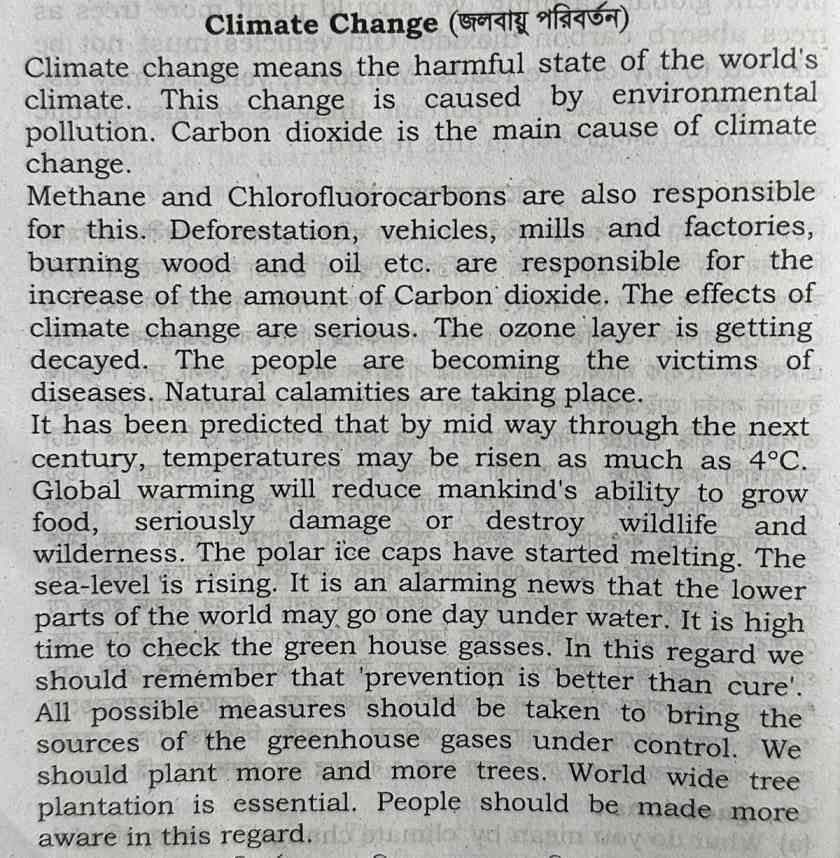
Climate change is one of the most environmental challenges facing the world today. It means long-term changes in the Earth’s temperature, rainfall, and weather patterns. The main causes are the burning of coal, oil, and gas, deforestation, industrial pollution, and the excessive use of vehicles. These activities release greenhouse gases into the atmosphere and increase global warming. As a result, the natural balance of our environment is being disturbed, creating risks for people, animals, plants, and future generations.
Climate change has many harmful effects on nature and human life. Global temperatures are rising, glaciers are melting, and sea levels are increasing. Many regions experience extreme heat, floods, droughts, storms, and irregular rainfall. These changes can damage crops and reduce food production. Farmers may face serious difficulties because crops require suitable temperatures and sufficient water. Climate change also threatens forests, wildlife, and marine life by destroying their natural habitats. Some species may struggle to survive when environmental conditions change rapidly.
The problem also affects human health, communities, and economic development. Extreme heat can cause illness, while floods and storms can destroy homes, roads, schools, and agricultural land. Water shortages may become more common in dry regions, making life difficult for millions of people. Developing communities can suffer greatly because they often have fewer resources to recover from disasters. Climate change can also increase food insecurity and damage national economies. Therefore, it is not only an environmental issue but also a social and economic concern.
There are several ways to reduce climate change and protect our planet. Governments should promote renewable energy, control industrial pollution, protect forests, and support environmentally friendly technologies. People should save electricity, reduce waste, plant trees, conserve water, and use public transport whenever possible. Schools should educate students about environmental protection and responsible living. Countries should also cooperate to reduce greenhouse gas emissions and share clean technologies. Every individual has a role in protecting nature. If governments, communities, and individuals work together with determination, we can reduce the harmful effects of climate change and create a cleaner, safer, healthier, and more sustainable future for generations to come.

Nasar is the author behind English Write Guide, creating simple and helpful content on English grammar, writing, stories, letters, essays, and compositions to support learners and students.